

About Timber Revive Bristol
An editorial resource on nutritional support for cartilage and everyday joint comfort, written for UK readers. We are not a supplement brand, and we do not sell capsules. Our work is explaining the ingredient categories you see in shops and online, in plain English.
Why this site exists
The UK joint-supplement aisle is busy, and most of the explanation happens on packaging built to sell rather than to inform. We wanted a place that described glucosamine, collagen formats, MSM and the rest in plain English, with the marketing stripped out.
That is the whole premise. Natural joint care for a reader who wants to compare labels without being sold to is the only reason any of this is written down.
| 01 |
Explain the ingredient, not the promise Glucosamine HCl, chondroitin, MSM, hydrolysed collagen peptides, type II collagen, hyaluronic acid, vitamin C and botanicals each get the same treatment: what the label calls it, what form it comes in, and how brands differ when they sell the same molecule. |
|---|---|
| 02 |
Read the pack like a shopper, not a chemist Serving sizes, the gap between the ingredient name and the amount, and the difference between a joint capsule and a powder you mix are all things you can check on the shelf in a minute, once you know what to look for. |
| 03 |
Say what a daily routine actually involves Support joints daily sounds simple until you are standing in a shop with three bottles in your hands. We write about timing, format and the reasons people stop taking something after a fortnight. |
| 04 |
Keep the language level Fast pain relief, restore joint mobility, strong and healthy joints — these phrases sell. Our job is to explain what sits behind them, and to be honest when the answer is that a label is repeating a claim it cannot support. |
Who writes the guidance
The copy here is produced by an editor based in Bristol with a background in consumer product writing, not clinical practice. That distinction matters more than it sounds. A pharmacist reads an ingredient sheet differently from someone comparing three bottles on a Saturday afternoon, and this site is written for the second reader.
In practice that means we read the labels. We compare how brands position the same ingredient at different price points. We note where a capsule count is flattering and where the serving size quietly halves. Then we write down what a shopper actually needs to know before deciding whether a joint capsule belongs in their routine at all.
We do not diagnose, and we do not give medical advice. If a question is about your own knee, your own prescription list, or how a supplement might interact with something a doctor has already recommended, the answer belongs with a GP or a pharmacist. We keep to the part we can do properly: explaining the categories, the formats, and the marketing patterns around them.
Because the writing is one desk rather than a newsroom, pages are revised slowly and deliberately. When something changes, it changes on the page you are reading, not in a newsletter you have to hunt for. That is also why corrections from readers are so useful to us — more on that below.

How we choose what to cover
We cover ingredients that appear in real UK products. Categories that do not show up on UK shelves with any consistency do not get a page. The site follows the market, not the other way around.
- 01 Glucosamine HCl and chondroitin Joint capsules
- 02 MSM and vitamin C Common pairing
- 03 Hydrolysed collagen peptides and type II collagen Two forms
- 04 Hyaluronic acid Format varies
- 05 Boswellia and other botanicals Plant-derived
Formats get their own treatment too, because a capsule, a tablet and a powder answer different habits. Anyone weighing natural leg capsules against a drink mix is choosing as much about routine as about ingredients, and the collagen formats page works through that comparison in detail.
How we handle claims
We avoid cure, treatment and dramatic transformation language, because it does not belong in supplement writing and it is not honest. Where a brand makes a big claim, we say so and explain what the label actually shows. If the pack says a product will eliminate joint pain, we look at the ingredient list underneath and describe the gap in plain terms.
That cuts both ways. Some products carry modest claims and sensible labelling, and we say that too. The point is not to be suspicious of everything — it is to be accurate about which words are describing a formulation and which are describing a hope.
Where the line sits
- What the ingredients are, and in what amount
- How the format fits a daily routine
- Which phrases on the pack are doing the selling
- When a question is for a GP or pharmacist instead
What a daily routine looks like in real life
Most joint supplements are taken in the morning, next to something you already do — a coffee, a breakfast, a handful of other tablets. That is not incidental. The routines that survive are the ones that attach to an existing habit, which is why format matters as much as ingredients when you are comparing a capsule against a powder or a capsule against a tablet.
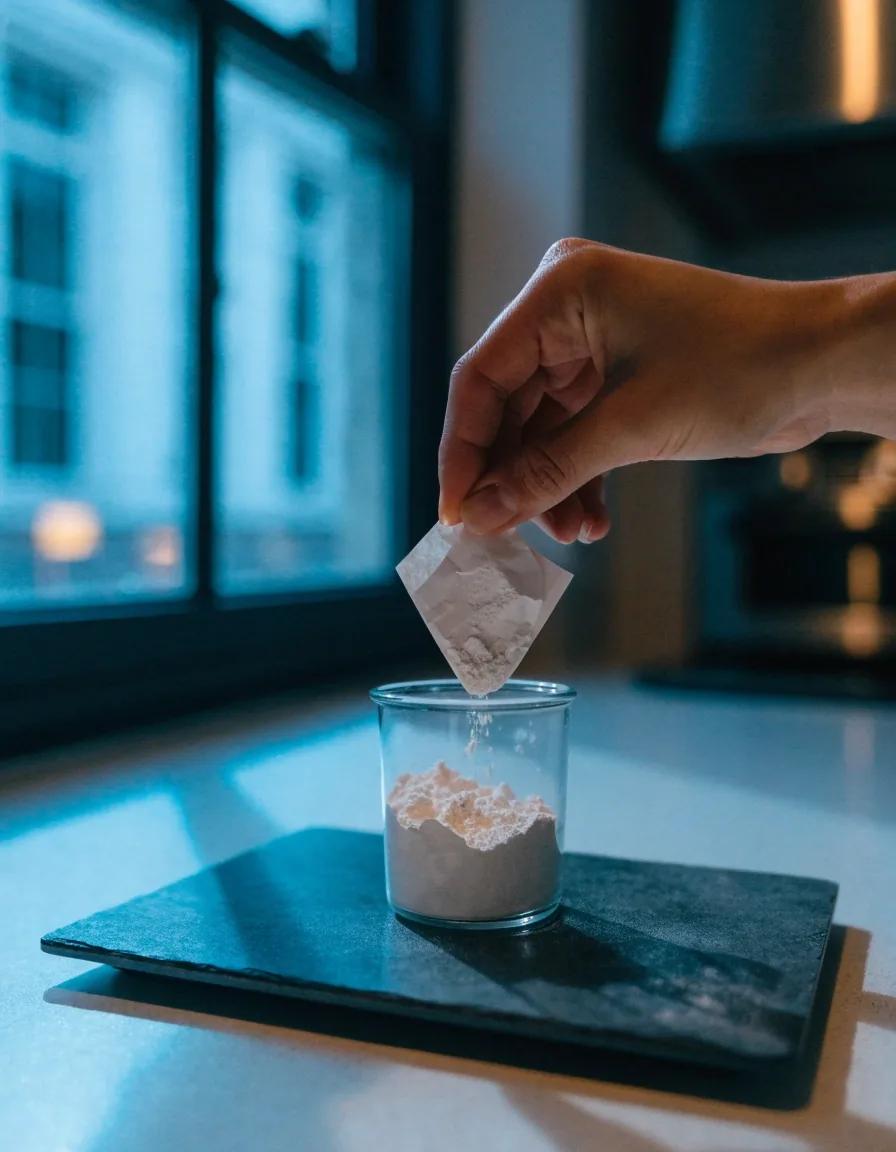
A jar on the worktop beside the kettle gets taken. A jar in a cupboard gets forgotten by the second week. We write about this because it is the part of support joints daily that packaging rarely addresses, and it is the part that decides whether a purchase was worth making.
None of this replaces advice about your own joints. If you are taking other medication or managing a diagnosed condition, a pharmacist can tell you in a few minutes what a label cannot.

Independence and how we stay that way
We do not accept payment for coverage and we do not run affiliate links into product pages. Brands are not consulted on what we write. When we reference a UK retailer's advice hub or a specific formula, it is as an example of how the market positions things, not as an endorsement.
The site runs as an informational project. There is no sponsored content, no paid placement, and no product link that generates commission. That keeps the editorial side simple: we only have to answer to readers, not to brands.
Money that does not touch the writing
No paid placements. No commission links. No brand previews before publication. If a name appears on a page, it is because the product is on UK shelves, not because anyone asked for it.
What that buys the reader
A comparison that is allowed to say a familiar name is unremarkable, or that an unfamiliar one is well formulated. The reader gets the same verdict whether the pack costs seven pounds or thirty.
Corrections and reader input
If we have got an ingredient detail wrong, or a UK product has changed its formula, tell us. Reader corrections are the fastest way this site improves, and we would rather fix a page than defend it. The contact page explains how to reach the editorial inbox.

Spotted something out of date? The editorial inbox is on the contact page.
Contact the editorial teamWhat this site is not
It is not a shop, a clinic, or a source of personal medical advice. It does not stock products, and it will not tell you what to take for a specific condition. It is a reading resource, and if that is what you came for, you are in the right place.
Everything on the site is written with that boundary in mind. Where a reader needs something we cannot offer, we say so and point to the person who can help.
- A
-
A shop
There is no basket, no stock list, and no product link that pays us. A capsule bought after reading here is bought from someone else entirely.
- B
-
A clinic
No appointments, no assessments, and no advice about a named condition. For anything about your own knees, hips or hands, a GP or pharmacist is the right first call.
- C
-
A source of cures
Supplements are not medicines, and no page here claims to treat or prevent anything. Where a pack suggests otherwise, we point out the wording and leave the decision with you.
Questions we get asked
Three answers cover most of what lands in the editorial inbox.
Do you sell supplements?
No. Timber Revive Bristol is a reading resource. We do not sell capsules or any other products, and there is no shop attached to this site.
Can you tell me what to take for my knee pain?
No. We explain ingredient categories and how they are marketed, but we do not give personal medical advice. Please speak to a GP or pharmacist, who can look at your own situation rather than the average label.
Do brands pay for coverage?
No. We do not accept payment for coverage and we do not run affiliate links. A brand cannot buy a page, a mention, or a kinder verdict, and no formula is sent to us for approval before it is described.
Who can I ask about a correction, or suggest a topic?
Write to the editorial inbox at [email protected], or use the contact page. If an ingredient detail is wrong or a formula has changed, we would rather fix the page than argue about it. Suggestions for ingredients sold widely in the UK are welcome too.
Start with the ingredient guide
It sets out the ingredient categories you will meet on UK shelves, what each one is normally called on a label, and how the formats differ in practice. From there, the daily routine and capsule-choice pages take the comparison further.
- Editorial inbox
- [email protected]
- Telephone
- +44 20 7907 0582
- Office
- 42 Whiteladies Road, Clifton, Bristol BS8 2LG, United Kingdom
- Hours
- Monday to Friday, 9:00 AM – 6:00 PM
Saturday, 10:00 AM – 2:00 PM
Surveyed 2026-10 · Timber Revive Bristol · Clifton, Bristol